
When referring to the main components within a business, it is practically impossible not to highlight human capital as one of the main gears in a company’s productive and creative process.
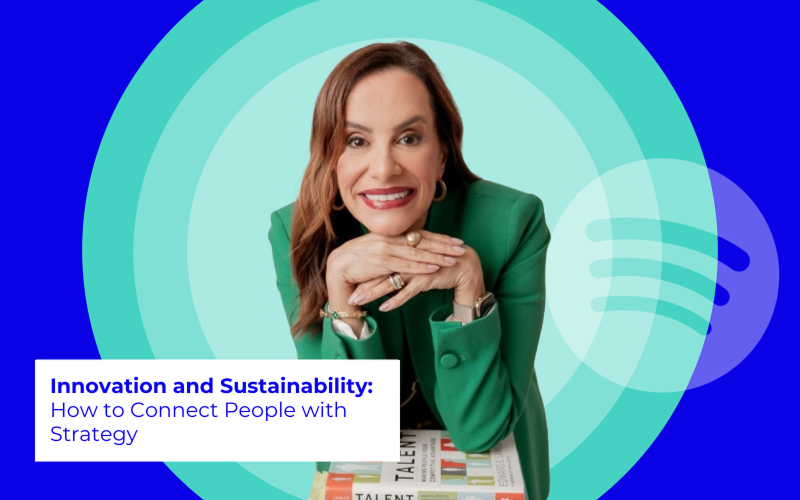
This week, we brought Luci Bellacosa to talk about how to connect people with the business strategy.
Well, Luci, good morning first of all. Thank you very much for your availability to be here with us on the Clave
channel. For those who don’t know you yet, let me introduce you: Luci Bellacosa is the Vice President of HR at Ball
for South America.
Before we start the conversation, Luci, I would like you to tell people a little about who you are and share a bit
about your career path.
Hi Débora, good morning, it is a pleasure to talk to you and to the Clave audience.
Well, my name is Luci Bellacosa, as you introduced me, I have a background in psychology, I have two postgraduate
degrees—one in organizational development and one in human behavior—and I also have an MBA in Business, which I felt
at a certain point was important for me to pursue.
My career in Human Resources goes back a long time. I think it all started back in college when I began doing
internships, and by chance I did an internship at a large company, 3M. I applied for the internship program and ended
up being selected, and that’s how I entered the organizational world.
It has been approximately 33 years now—it is a lifetime, I know—but I always tell everyone that every day when I
arrive at work I like to feel the experience of those 33 years, but with the curiosity, excitement, and motivation I
had when I was an intern 33 years ago. That makes a huge difference in my perspective. I truly enjoy what I do, I have
a lot of energy for it, I have love, passion, and curiosity. Always with a learner’s mindset, because there is always
something new coming.
For example, the pandemic changed the way we look at Human Resources. It brought new challenges, and it was necessary
to go back to being an intern in that process—go back to being a learner, sit down, observe, learn, ask questions,
connect with other people so we could move forward in this new universe, in what everyone is calling the new normal.
There is nothing normal about this “normal,” right, Luci? If we look at it, there is nothing normal at all.
It was announced, and this is public, the relocation from Rio de Janeiro of some areas to São José dos Campos, also as
part of a business strategy and proximity to customers.
How was it to lead a project focused on people in the middle of this whole pandemic? What were the main impacts from a
people perspective?
It was a great learning experience, Débora. We created a working group where each person had a very clearly defined
role, what we call a workstream. We had the communication role, the financial aspect of the project conditions, the
Information Technology area, the legal area, the people area, the mobility area for those who were relocating, and I
was the leader, the executive sponsor of the project.
We had a PMO, we had a meeting schedule, everything very well planned and organized. And in fact, we were going to
move the South America corporate office, which was located in Barra, Rio de Janeiro, to São José dos Campos. This
involved approximately 140 people, and we had a goal—ensuring business continuity and business safety—of transferring
around 80 people, meaning 80 families were our target to avoid any risk of business disruption. Everything was very
well planned. In March we would carry out visits, and we were even inviting people who had not yet decided to go and
get to know the city, do a tour—and then in March the pandemic came. On March 16th the lockdown started and everything
stopped.
We had an office under construction, and I think having a multidisciplinary group was one of the keys for us to look
at the situation and say: now what? What happens to our plan? The IT area became extremely important because we
started to look at everything virtually.
We had a workstream, a person, a leader in the people area whose role was to connect with employees. She started
making virtual connections with these families. The mobility team, which was responsible for the actual relocation,
started creating the possibility of virtual tours, including apartment and house searches—all done virtually. The
communication area also played a very important role because we realized that the communication strategy had to be
much more intense and much more face-to-face. Talking to people, even if through a virtual tool, is still talking to
people. We started having more frequent meetings with the group that would move and with the group that was undecided,
in order to engage them in the process.
I think the first point was to say: look, this does not change the plan. We are going to do this move. The motivation
behind it is a business motivation. It is better for the business, so the idea of “let’s live a future together” is
still on the table. That was important to communicate, and I personally communicated that to all people.
The second point, which was very important, was understanding each individual situation. We spoke with all employees
who wanted to relocate to understand their situation in terms of children, schools—because school visits also became
virtual—so understanding children, schooling, spouses, how things were for each person. It was important at that
moment to have sensitivity and empathy, and to respect each person’s timing.
We still have a small group of employees who have not yet completed their move from Rio de Janeiro, although, to my
surprise, the majority did. We had a target of 70% relocation, and we achieved 80%. People who were undecided at that
time became even more engaged when they saw the company’s care in carrying out this move in the middle of the
pandemic. People who had even left Ball—who had decided not to come, had already joined another company—called me
saying they wanted to come back. “Can I? Has my position already been filled?” And we welcomed those whose positions
had not yet been filled.
This was an incredible movement because people became even more engaged in this relocation project. We had many people
saying: “I already liked working at Ball, Ball has always been a company that respected people, that is
people-oriented, but during this pandemic I realized it goes beyond that. It cares for people, it cares for the
community, so I want to stay in this company.” Amid all this, people handled everything virtually—they rented houses
and apartments, moved, and are now living in São José.
Because during the pandemic I said: “There is no need to rush at this moment, whoever wants can extend the relocation
plan until January.” But I would say that 90%, or more than 90%, of the people who were going to move to São José have
already done so.
And there was still the construction of the new office itself, because we were in a new building and we were the first
company to move into that commercial building. To manage the process and build the office, we engaged with the
architecture firm we hired. I personally got involved—we have a team working on this, but I said, let’s go. We went to
choose chairs and furniture, and the architects would close stores and say “you can come,” and we would go to the
closed stores to make our selections. We chose paint colors, we developed the entire visual design with the
communications area. It was a journey that, despite so many difficulties, made me connect with people more than ever
before, made me feel closer than ever to people, and made me feel more motivated than ever to lead this transformation
process in the middle of everything.
Because instead of seeing the pandemic as a difficulty or an obstacle, as HR we had to deal with the pandemic
itself—changing all safety protocols across 14 factories. We have 2,600 employees spread from north to south in
Brazil, as well as Chile, Argentina, and Paraguay.
We had to create an entire COVID safety protocol, engage with government authorities, hire a medical team to support
us and support our employees in terms of those who eventually became ill and had to be hospitalized, and monitor their
health condition. Thankfully, we did not have any employee who progressed to a more severe condition, but we did have
people who were hospitalized and today they are all recovered and back at work. We continue in this process of
monitoring, testing, and ensuring safety through all safety protocols.
And amid all of this happening, with the relocation to São José, moving and building the office, incredibly enough we
delivered the office on schedule, even before the pandemic. It was delivered on time, and our target of 70% relocation
was surpassed. We had approximately 80% of people transferred, and people are very happy here in São José.
That’s exactly what I was going to ask you, Luci. Because when we talk about culture, these are completely different cultures. The pandemic was good because it broke geographical barriers that already existed through our beliefs and paradigms. Do you have any actions in place to monitor this? To support these families? You already told me that the central point of your strategy is a humanized approach. How is this adaptation going?
The use of this office is also following a very strict protocol. We created some criteria for prioritizing office
usage, one of which is always a maximum of 25% occupancy. In addition, we had to adapt the entire office, install
acrylic protective barriers, and create a full health and safety process for people. What we notice is that each
person, each family, has their own particularities. There are families with children in homeschooling, and these
people are choosing, even though they have already moved to São José, not to come to the office so they can accompany
their children. Sometimes they are sharing this responsibility with their spouse, so we do have these situations.
But everyone I have spoken to is generally very happy to be here. They are well adapted, because I think the main
issue about moving from Rio de Janeiro to São José at the beginning was that people said Rio has something São José
doesn’t, which is the beach. The outdoor lifestyle—life outdoors on weekends in Rio de Janeiro is something completely
different.
I lived there for almost a little over three years, and we see how important and valued that is. Many people live in
apartments, and it is a hot city, so going out to the beach, walking, I myself would sometimes sit at the beach to
drink coconut water and say to my husband: look, we sit here and we can see at least six different sports being
practiced outdoors, for free. People had that, but the pandemic took that away from them. It took away this outdoor
lifestyle. People thought, well, if I am at home here, I would rather be at home there where I can at least go to a
park more safely.
And some people have been reporting a lot about this feeling of safety. “Wow, I can walk every day with my phone
without worrying about being robbed, I have been doing my walks with my phone.” So people are well adapted. Of course,
they miss their families, but in any case, during this time they also could not travel and visit family. Being here or
being in Rio didn’t change much in that sense. I think in this way the pandemic actually helped the adaptation.
Evidently, when all of this is over, people will be more adapted in São José and will be able to go back to Rio on
weekends, visit family, and so on.
The criteria for choosing the office relocation location—initially we were going to move to São Paulo, either the city
of São Paulo or its surroundings. We conducted several assessments in different cities, and São José was one of them,
since we already have a plant in Jacareí and a shared services center located here.
We also considered Campinas, the city of São Paulo in the Itaim area, Jundiaí, Indaiatuba, and other cities in the São
Paulo region. Several criteria were brought to the table, such as proximity to an international airport and similar
factors, which we evaluated together with an external company that conducted the assessment. One of the criteria we
included was which city would make it easier for people to travel back to Rio de Janeiro. Because most would leave
family behind in Rio—parents, sometimes children in college—and São José met this criterion, since it is at a distance
that allows people to drive to Rio and return on weekends. Some people are doing this to visit family. There is also
an airport with regular flights to Rio de Janeiro, and it is very close to Guarulhos International Airport.
People felt quite safe in making this move, they felt safe because of all the support the company provided during the
relocation, and because of the support the company has been offering in helping people and their families adapt. We
even hired a consulting firm to help spouses look for new job opportunities if they were interested in doing so, as
well as support for housing searches.
People felt very safe in making this transition even during the pandemic, and what I have been hearing is that
everyone feels very welcomed in the city. It is, in general, a welcoming city. People feel embraced, they like the
climate, it is a very green city with many parks, and everyone has been valuing commuting distances a lot. “Wow, I get
to the office in 10 minutes—nothing here takes more than 10 minutes.” So mobility has been something people really
value, along with safety and quality of life.
I notice that everyone who has already moved, and with whom we have spoken, feels very well adapted—and even better
than that, they feel that their family life has improved after the move. That is something very rewarding to hear,
especially in the context of the pandemic, so I am very happy to hear this from people.
We are also very happy. This shows me how much is possible, especially because Ball is a company that strongly works
with sustainability and innovation, and you place people at the center of this strategy.
Without people, without looking at each individual in a personalized and respectful way, I cannot deliver my
results—my business is not sustainable. And beyond environmental issues, when you bring this perspective, it really
gives me the sense that people are truly at the center of the strategy.
Now thinking a bit ahead, thinking about the future vision, there is a direction called Drive for 10. Thinking about
that, what have been the main people-related actions? I am thinking ahead, some time from now the pandemic will end,
someone will find a vaccine, we will return to a life different from today, but with many learnings.
But thinking a bit about your people strategy, what have been the main actions, and what do you see ahead that you will bring as learnings from what you are experiencing today?
First of all, Ball’s leadership has been guiding all of this in a very calm way, making the right decisions and
providing all the resources so that people can move safely within our factories.
We work with a product that is essential, because it is connected to the food supply chain. Our factories did not stop
for a single minute throughout this entire process. Our workers continued going to the factories—supervisors,
operators, maintenance technicians, specialists, engineering staff. We continued doing everything we did before the
pandemic; it had to continue—that is one point.
Another point is that the pandemic brought to people a sense of self-care, care for the environment, a different way
of thinking, and I believe this is present in most people now. And our product is one that aligns with this moment,
because it is the most sustainable packaging in the world—infinitely recyclable. If the pandemic brought reflections
related to sustainability, then our product became a consumer preference in this context.
Incredibly, people today are consuming it and often prefer it, sometimes even paying more, but they choose it because
of the purpose of consuming a packaging that in 60 days you know you can recycle and use again.
And this has brought us a huge growth challenge. All our growth plans in South America and globally have not only
remained intact during the pandemic for the near future, but have actually increased in volume.
We have a very robust growth plan, and when we look at it, there is only one way to achieve it. Ball is a financially
very healthy company; it has the resources to fund this growth. Our challenge is precisely people—preparing people,
engaging them, developing them, providing tools, and more than that, also opening opportunities in the market.
And when we look at this growth scenario, it is impossible not to bring up diversity and inclusion. Within this growth
strategy, we understand that we will only grow sustainably if we truly have a very solid diversity and inclusion
policy and strategy.
We have very solid initiatives being built to increase our understanding and the development of people connected to
diversity and inclusion, because diversity is a fact: I have X number of women in leadership and so on; inclusion is
something else. Inclusion is about providing tools, opportunities, and understanding the issue. It is about looking at
the dynamics of privilege in order to include those who did not have that privilege.
We have a very well-structured strategy in this regard, focused on leadership development looking at young talent. We
have a structure that we call Talent Review, which is an annual process of looking at talent. This talent review goes
up to managers, so we are creating an additional step to understand who the supervisors, specialists, and young
talents are, how we accelerate the development of these people, how we bring more women into an operation that has
little gender diversity, and how we encourage this.
Today I have been working a lot in this direction. I think the COVID issue is something that, with all the medical
protocols and the medical team we hired, is something we have more control over today. We have more knowledge to deal
with it, so our focus today is on the future. Engaging people and saying that there is a future.
This future can be very bright for you, you can have many opportunities, our product is a winning product in this
future. I think I could not be more engaged, happy, and motivated about what lies ahead in terms of people and people
development.
Very nice, Luci. If we were to expand on the topic of diversity and inclusion, which is a topic we really like at
Clave, we would be here for a long time! We have even opened other discussions about it, because it is truly an
important topic, right?
Diversity is no longer just about race or gender; it is about how I work on the inclusion of those who are different,
even within my own company. How do I create this match to promote innovation, to promote research, to promote the
company—we could stay here for many, many, many hours.
But Luci, as we wrap things up, I would like to thank you very much for your availability. I think Ball has a very
successful story, and its people strategy is one that places people at the center, in a very respectful and welcoming
way. It is something that makes me feel good. And we show other HR teams: look, it is possible. It is possible to be a
highly innovative, highly technological company, while still bringing this human side—because people are what will be
part of my strategy.
And that also makes me very happy, to fuel other people, because many people say, “wow, how do I start this discussion
of putting people at the center of my strategy to justify it to my board? What’s the advice? Where do I begin?”
This is so natural at Ball, right, that it’s even hard to talk about, but I think I’ve had other experiences where it
wasn’t so natural, it was just a speech. It’s hard to talk about this because it’s so obvious, right? It’s right there
in front of us—because in a company you buy machines, you buy technology, we also buy knowledge. Money, capital, buys
all of that—technology, knowledge; I can bring in the best from MIT, it buys raw materials, it even buys
innovation—but it does not buy engagement, it does not buy people’s minds and hearts.
And when I talk about minds and hearts, that’s the definition of engagement. When people are mentally present in what
they do, connected, and emotionally connected to the organization and to other people in the organization. I say this:
a beautiful strategy that looks great in a PowerPoint does not happen. It only happens when I engage people and
recognize that each person can be part of that strategy, when I share this vision with people—and by sharing this
vision with people, I enrich that vision, when they bring their creativity and their diversity into this conversation.
Because I say that when we talk about diversity, we are all different, Débora. Everyone is different; we are all
diverse. We don’t want to create a company made up of niches—women, gays, Black people—no, we are all different. We
are strong to the extent that we recognize that everyone is different; we are different, but we are united around
common purposes. It’s not even about having a common vision, but the purpose has to be common. Because different
visions enrich the process.
Wonderful, Luci, because that’s exactly it. What drives me? How does my individual purpose connect with the company’s
purpose? It starts with the individual so that we can look at the collective.
Luci, once again, thank you so much for your availability. I hope to see you many, many more times here on the Clave
channel, so we can come back with other topics.
It will be a pleasure, Débora, really enjoyable. When all of this is over, you already have an invitation to come here
and have a coffee with me, Adriana, and Taís. Not a coffee—maybe a soda, a tea, a water, in a can!
A big hug, Débora. Wishing you all success.
Watch the content by clicking here.

Débora Honda
Has over 15 years of experience in performance improvement and learning projects across the main sectors of the economy. A specialist in Profile Mapping, with national and international projects focused on transforming organizational environments. A researcher on the impacts of digital transformation on the future of the labor market, she has already helped major companies build their Talent Management strategies.