
What are we talking about when we refer to diversity?
Diversity includes characteristics related to gender, race, ethnicity, sexual orientation, physical condition, social class, gender identity, religion, accent, nationality, and age. It also encompasses educational background, health, refugee status, aesthetic diversity, experience, political positioning, and different points of view. It is the set of characteristics that make us unique.
And what are we talking about when we refer to inclusion?
Inclusion is the valuing and integration of populations that, due to historical and social factors, face barriers in society and in organizations.
A diverse team puts the company in touch with everything it needs to improve and make its strategy more competitive. Several studies have already shown that investing in diversity creates value.
More diverse companies have a 35% higher chance of financial returns than the market average. According to Development Dimensions International, organizations with diverse teams are likely to grow their business 1.4 times more than those with homogeneous teams. And according to McKinsey & Company, 95% of leaders believe that D&I drives innovation.
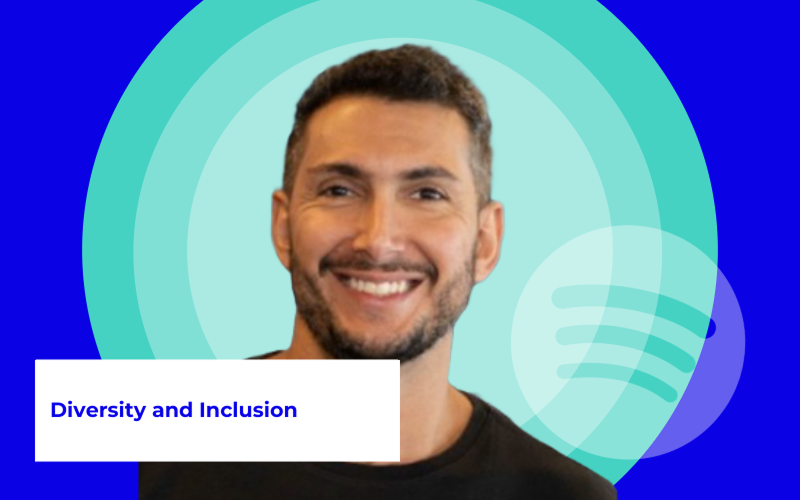
These are just some of the reflections that our interviewee of the week, Salim Khouri, Head of Talent and Diversity LATAM at Ford, shared with us.
Read the full interview:
Salim, how did your involvement with the topic of diversity and inclusion begin? Tell us a bit about yourself and how this topic came into your life.
I’m from Bahia, the son of a Lebanese father and Bahian parents—a real mix. I have a degree in Communication and
Administration, completed an MBA in HR, and also hold a master’s degree in Administration.
In addition to working at Ford, I am also a professor in many areas related to human management and HR transformation,
among others. I have almost 20 years of experience in the market, including moments in Marketing and most of my time
in HR. And some time ago I started to become fascinated by and connect with the topic of diversity. I believe it was
because of my family, being a diverse family, my own life, and my organizational engagement. So I started discussing
this subject at Ford about 3 years ago, began to learn and deepen my understanding, and started to realize the
importance of this topic in truly creating increasingly innovative and creative environments that generate more
results, as thousands of studies already show.
Then I started speaking more openly about the topic this year—well, actually not this year, I think last year. I
started participating in some events, and I began to expose myself a bit more on social media.
Because I realized I needed to share some of my stories, talking at times about my sexual orientation, my fears, my
mistakes and successes, and understanding how I could contribute to transforming society and the world—trying to
inspire people and show them they are not alone. So every day I try to become more engaged. I am on a learning
journey, Ingrid—just like everyone else, right?
Even some celebrities this week posted that they are in a process of rethinking and reshaping their own prejudices. I
also had my prejudices, I also used to judge, and I am still in a process of deconstruction, just like everyone, still
learning about the topic. And I think it is more or less that.
So within Ford I began to realize the importance of this for the organization—for transformation, for connecting with
people, and for creating a more pleasant work environment.
And outside of that, I also have a social project, I mentor several young people and individuals from diverse
backgrounds. I have a large volunteer group focused on career guidance for socially vulnerable groups. So the topic
ended up emerging in this way.
And I think—it’s even funny, something very personal—about two weeks ago I found a lot of letters and texts I had
written when I was 18 or 20 years old, full of fears and concerns. And I look back now and think about how I overcame
all of those issues, and how today I can openly come here and talk about my life, and how this can actually help us
transform society. Because despite everything, in diversity discussions we often say that one of the first steps is
recognizing your privileges. Despite all the suffering I’ve experienced, all the challenges I’ve faced, I recognize
that I had many privileges. I think accepting that and facing it gives us strength to move forward.
Perfect, so let’s get started. Tell me a bit about how science can help in building this leadership pipeline. And
perhaps there are people listening to our podcast who still don’t know—what exactly is a leadership pipeline?
So, how does science build and support this construction, and what is a pipeline?
Well, pipeline means “pipeline” or “tubing,” so it’s actually a term that is even hard to translate into Portuguese.
It could even make for a funny headline like “leadership went down the drain,” so to speak. It’s interesting that in
one of the Portuguese editions, instead of using “pipe,” they used “straw.” The concept was created by Ram Charan and
other authors, and it basically means the following: when we talk about leadership, it depends heavily on the
hierarchical level and role a person has, and that completely changes the scope. This is one of the limitations in how
leadership is often discussed—people say things like “a leader must have this, must be proactive,” but when we look
more closely, we see that the scopes are very different. For example, one of the key points in the leadership pipeline
is analyzing how a person allocates their time. Of course, every leader and professional needs good time
management—that’s generic.
Now, if we look at the specific scope of the level the person is in—for example, someone who just joined and is not
managing anyone yet—they are actually managing themselves, and that’s already extremely difficult. There are people
who go through their entire lives without being able to self-manage or develop discipline. So at this stage,
leadership over oneself means having self-control, discipline, respecting schedules, meeting deadlines—these are
essential. Only after that can they move to the next level, where they start leading others and managing a team.
And this person who leads teams now has a requirement that the previous level didn’t: time allocation for others. They
need to allocate time to guide people, do coaching, mentoring, answer questions, and give feedback to the team.
That’s why I translate it differently. The first edition called it “time application,” which is not great. The second
edition used “time management,” which is better, but I personally prefer “time allocation,” because I look at how the
person distributes their schedule to understand how they are actually using their time. Someone can manage time well
but still allocate it poorly—meaning their time is not aligned with the demands of their role.
So when we start working with this in a more specific way, we move away from the overly simplified discourse of
management becoming something “pop”—everyone talks about entrepreneurship, startups, leadership as motivation or
mindset. Those things matter, of course, but they are only part of it. When we study it scientifically, we begin to
understand mindset from a psychological perspective, and we see research-based ways of understanding time management
and behavior. This gives us deeper knowledge, avoiding the superficial and generic view we often see.
And one very important point that many people fail to realize is that management starts at the very first stage:
managing oneself. People often think they are not in a leadership position yet, and that the next role will prepare
them. But it’s the opposite. If we don’t start by managing ourselves—our time, our deliverables, our quality—how can
we possibly lead others? This mindset is something people forget far too often.
Perfect, what happens sometimes with younger professionals is that we tend to have a somewhat overly voluntarist and motivational discourse—thinking that management is only that, that there is no science or knowledge behind it. It becomes the idea that you can just look ahead without following the necessary steps. And the pipeline shows very clearly that there are several stages; it is a sequential process that you cannot skip, because it will show up later on. That’s why you even have CEOs who carry flaws from the very beginning, such as not knowing how to lead a team.
Then the person thinks they will join a company and become a director in six months; if they don’t, they get
frustrated. Or they join and immediately ask what they need to do to become a manager. So the basic answer always
starts at the first level: do very well what you were hired to do. You need to deliver results; you need to prove
yourself in order to gain legitimacy. It’s very similar to a football team. For a player to become a leader, the first
thing they need to do is play well, because they need to earn credibility from others. Without that, it becomes very
difficult.
So what you added is important. First, you need to manage yourself and deliver results, and only then you can start
adding other responsibilities.
Perfect. Let’s talk a bit about these challenges. What are the main challenges in implementing this model?
I think we have, from the company’s structural point of view, two issues. The first is that in the pipeline it talks
about a type of career path a person follows—a managerial or leadership career—because you will be working with other
people. So you need to have skills and interests that can be developed. And many times the person doesn’t actually
want that.
For example: I’m a great salesperson, I enjoy talking to clients, but people like my work so much that they promote me
to sales manager. But who said I want that? Who said I even have the know-how? And they promote me to do something
I’ve never shown I could actually do.
Companies need to have flexibility, and we often talk about the Y-shaped career model, where a person either follows a
managerial path or a specialist path. I might want to be a salesperson my whole life, a surgeon who operates, or a
journalist who goes out and reports. We need to make space for that. So what do we do with the salesperson? We promote
them to a “super salesperson,” not a sales manager—handling complex clients, new areas. So within the company
structure, we need to think about how to leverage both paths: those who will pursue management and those who will
become specialists, using their technical expertise effectively.
The second point is how to identify this in people. You need a structure and a solid evaluation system to understand
whether the person is on the right path or not—whether it’s aptitude, interest, or competencies. It’s complex because
there are many variables, and you need a reliable and fair assessment mechanism, which I think is the key point.
Perfect. And you mentioned a point that I think is a critical mistake, one that for a long time—and companies still
fall into it—is promoting employees with high performance but low potential for management. These are people who don’t
have the aptitude for management.
I once had an experience in an interview with a candidate who had been dismissed from a company where he held a
managerial position, while the role I had available was a specialist position. He asked me: “Here, where I’m
interviewing now, is it possible to grow as a specialist?” Because his dismissal from the previous company happened
because he didn’t meet the expectations of a management role—which he didn’t even want—but since he performed very
well in his original role, he kept being promoted. However, when he reached the managerial position, he was not suited
for it or did not have the competencies required for that role.
I think this is a mistake that companies often make, but we are starting to see other career paths
emerging—possibilities for lateral moves, expanding goals and opportunities, and also offering more robust
compensation, without requiring the person to grow vertically.
Perfect, I think your example illustrates it very well. Because when this structure doesn’t exist, it becomes a
serious problem for the company. You lose twice—you lose a good salesperson and you don’t gain a good sales manager.
So what was going well turns into two problems.
And what academic concepts can we use in implementing this project?
From an academic perspective, I’ll talk about my own field: communication. I conduct academic research specifically
looking at how communication behaves across the different levels of the leadership pipeline and career
progression—what the demands are and what the specific communication competencies are. And one of the most difficult
aspects, which people often only learn in practice and is rarely discussed, is when you reach what I call the
fourth-level leader—you become the leader of an entire function or area. You become a specialist leader within the
organization. In a hospital, for example, this could be the head of the ICU, the head of nursing, a commercial
director, or an industrial director. This person is responsible for an entire specialized function.
And what is the main challenge of this leader? They can no longer think as just a member of their area—they must think
as the leader of the area. And what does that mean? It’s not about generic competencies like time management,
communication, or proactivity. It’s something much more specific in communication that I call the “language translator
leader,” a concept I borrowed from journalism theory.
Why do they need to translate language? Because if I’m the head of nursing in a hospital, I spend about 80% of my time
talking to people outside my area. I need to develop leaders within my own team first—this is why the previous stages
matter. In those earlier stages, I need to form multipliers, people who can act as professors, coaches, and mentors,
so they can run the area when I’m not there.
In practice, if we think in terms of time allocation, out of five working days, I spend four outside my own area. As
the head of nursing, I will be speaking with the medical director, ICU director, finance director, engineering
director. I spend much more time doing that because I need to “sell” my area to others and understand how other areas
align with mine. For that, I must master communication. Inside my own area, I can use technical language. But when I
talk to finance or marketing, it becomes a different language entirely. It’s like speaking Greek to each other if you
don’t translate. So you must know how to translate your field into the language of others. It’s a complex exercise,
and most people don’t realize this.
So this idea of the functional leader becomes even more challenging as organizations become more specialized, because
they must operate across multiple languages and interfaces.
There are two main ways to deal with this. One is through soft skills training—communication, listening, text
interpretation. The other is through tools that help structure and simplify communication. I personally like visual
tools a lot. The Japanese already did this during World War II in project management and quality systems. More recent
tools like the Balanced Scorecard—which I really like—and design thinking, the Business Model Canvas, and similar
frameworks all help because visual thinking allows everyone to speak the same language faster. So the leader must be
able to master all of these.
And you mentioned one of them that I find fantastic, because it shows synergy between areas—the canvas. You can
understand where it starts and how it connects to different interfaces, and in a single report, on a single page, you
can see all these interconnections.
Eduardo, this point you brought up about communication touches all areas, but from my perspective in HR, I see it as
one of the biggest challenges. I joke that HR speaks its own language—and only we understand it. We use many terms
that are exclusive to us, and when you go to the client area, they don’t understand them. And this happens across all
functions, especially back-office areas like HR, finance, and technology, where there are strong interfaces with the
core business areas. In these cases, this ability to translate becomes essential.
One piece of advice I would give people is to spend more time within the client area. Speaking as someone from HR, one
of the key shifts for me was sometimes stepping away from sitting only with HR and instead sitting within the business
areas. Because you start to understand their reality, listen to their language, adapt your own language, and become
more effective—while also building proximity.
Of course, with the pandemic, in-person interaction has shifted into the virtual world. But what matters is staying
present, accessible, and close—even if it’s not a formal meeting where you have direct interaction with the client.
Being there to listen and understand the dynamics of how the area works makes a huge difference in bridging
communication gaps.
Perfect. And I think one of the terms you used that I really like is when you mention “client,” because many people
don’t immediately realize we’re talking about the internal client. I find that excellent, because it actually shows a
much closer relationship. When we talk about the sales area—which today has a major communication challenge—and we
talk about consultative selling, the salesperson, because they work with targets, faces a psychological challenge that
not many people notice: they deal with anxiety. They may need to make 20 visits to close one deal, so they deal with
pressure, with time. In that process, they often think they need to talk more, instead of listening.
So I often compare this role—especially through the idea of “client”—to what HR does in consultative selling:
listening to the other area before speaking and translating your language across all other areas. Language is exactly
that—it is the way we create connection. The word communication comes from “communis,” meaning community—you are
forming a community. For example, if you want to know whether someone working at an airport or an airline is from that
field, you’ll notice: if you say just one word like “airplane,” they will immediately correct you to “aircraft.” In
healthcare, you need to know the term “glosa,” which is when a payment request is denied. In real estate, if you say
“destrato,” people immediately recognize you are from the industry. We start to discover these nuances everywhere.
There are many of these examples that I find fascinating, and I can even say from personal experience that it took me
a while to develop this. Even though I worked with strategy, my area became heavily focused on training and education,
including MBA teaching in people management, so it took me longer than it should have to develop this sensitivity.
These are things we learn over time, and once you do, you are able to present much more clearly the value you bring
and what you have to contribute. And all of this comes from communication techniques—you need to develop active
listening, empathy, and so on.
And a final point you just raised, which I also think is important: communication also starts with listening. People often think that communicating is about speaking, but it’s also about listening. It’s a dialogue, not a monologue.
Exactly. I once wrote a text that is often quoted—Rubem Alves wrote something along these lines: I always see ads for oratory courses, but I’ve never seen an “escutatória” course. It would be a course for you to stay quiet and listen to the other person. So this is something that really needs to be developed. I ended up adopting some techniques to train this, but it is much more difficult. That’s why we call it active listening. We have to make an effort not to speak, to manage our emotions, and that’s where emotional intelligence and many other aspects come in.
We could definitely stay here much longer, but we’re already getting close to the end. I’d like you to share with us the lessons learned about applying this concept—the biggest challenges brought by your students from their organizations, how they are handling it, what difficulties they are facing, and what suggestions you’ve been bringing to address these practices. So please share a bit of what you’ve been observing in the classroom.
Well, here we go. I really like a phrase I discovered on the internet through Richard, who is a businessman in this
EduTech field, which is a phrase spoken by the Portuguese professor José Pacheco, which says: teachers of the 20th
century teach students of the 21st century using 19th-century techniques. It doesn’t add up. That idea of the teacher
speaking, the student copying, taking a test that measures the student’s ability to write what the teacher wants them
to write—that is over. If you say that school already has methods, I had the privilege of studying in a fairly
avant-garde school in this regard, the Colégio de Aplicação at UERJ. Instead of writing an essay, which is a technical
thing, you would discuss a topic, we would write, and then after debating the topic we would write again. So you do
something different from simply listening to the teacher and putting it on paper.
When you go into an MBA, executive education, this becomes even more serious. Because first, the person is focused on
work most of the time. The person has a series of problems they need to solve, so what they will learn—what knowledge
they will acquire that does not add value or that they can somehow apply in the short or medium term—is something they
already have a barrier to learning. Of course there are interesting things, and that is why we differentiate training
from development. Training is for now, development is for the future. You train Excel spreadsheets and you develop
leadership. These are competencies that yield results later.
This issue of lectures being the first point in learning. So I really like something I find interesting: working with
simulations, practical projects. The learning between students themselves changes.
What happens is that you could talk about a classroom in the 19th century, or even the 20th century, where everyone
had time. Today people learn in a different way. You cannot expect the classroom to remain the same as it was 150
years ago.
For example, I recorded a video that was under 10 minutes about BSC. Probably if someone watches my video, they will
learn more about Balanced Scorecard than in a 30-minute class with me. Because in class I decide the time and the
person has to adapt, but if you have the opportunity to learn at the time you want, at the time that best fits, at the
time when you will have focus, then it is much better.
Today we talk a lot about student-centered education, active methodologies, but in practice it often ends up being you
speaking up in front of the room. If you truly understand that the process depends on the student having interest, you
create alternatives at that point. Putting a practical challenge for the person to solve is a very powerful way of
learning.
For example, when I teach classes on Canvas, I don’t actually explain Canvas to them. Instead, I spend 80% of my time
preparing the class by taking questions from books, improving them, making them more intuitive, adapting them to the
way people actually speak, collecting student feedback, adapting the model, changing it to be more intuitive. So with
that, the material is already more or less ready. It’s that Abraham Lincoln quote: “If I had eight hours to cut down a
tree, I would spend seven hours sharpening the axe.” So that’s it—I focus on creating questions so that the person can
work on them. So I don’t go there and explain step by step what needs to be done so the person can then do it. I
present something a bit like that, and people think it came out of nowhere, but that’s what ends up working. You bring
out the knowledge that the person already has within them, their practical knowledge, and you place a forward
challenge to be solved in teams. One helps the other in this process, and you get peer learning.
You cannot just say that the teacher is the holder of all knowledge. If I am going to talk about leadership pipeline,
if I am going to give a class on BSC, I have to do something in my field that has more information than the videos
made by the creators of those models. I have to do something that is different.
In my field of communication, I did a lot of sales training, which is an area where people are usually very bad at
training salespeople. The salesperson is under quota pressure, under time pressure—so the challenge is engagement.
This is all what we call active methodology.
Perfect, I think the academic world is gradually rethinking this. The positioning of the client—which is the
student—where they should actually be. Because until now it was very focused on content and its quality, but not very
focused on the way that content is delivered.
Finally, to wrap up, what advice would you give people about implementing a leadership pipeline? What tips would you
give, based on what you bring from the classroom, what you observe in the market, that are effective? Of course, we
are not going to cover all possible doubts, but rather an initial path of what a person should do.
Well, I think there are two things. First, this initial idea of having career plans, career development paths, where it is very clear that the person can go in both directions. For example, a person can take the specialist track, but sometimes the company’s own structure does not support that, but there should be a structure for the person to leave and at least become a PJ, an independent contractor. You can have some structures where you even keep the person as a service provider, so they can focus on that area, which can actually help the company itself.
And today our labor laws are beginning to bring some aspects that help in that regard.
Exactly. I like to joke that outsourcing is something absolutely simple: instead of making it, you buy it ready-made.
For the company, that’s what it comes down to.
A second point is the way evaluations are done. Building a track for those who will follow the managerial path,
without neglecting three aspects. As the leadership pipeline itself says, giving great attention to time allocation,
and evaluating the person even to help them do it.
Time allocation is different from time management. Time management is a competency that people say you must use when
you have a heavy workload. Time allocation is about how you decide your priorities. You may manage your time well, but
your time may be poorly allocated. Just as there are people who allocate well but manage poorly. So in this case, it
is about seeing how the person distributes their time and whether they are truly dedicated to it, and this is
something we can clearly observe in behavior. This part of time allocation, I don’t see as such a high priority. Ram
Charan says it is one third of the evaluation.
And a third point is the belief and value system. Corporate values, value is what you deliver to the customer. What we
call a system of beliefs and values is the person seeing themselves as a leader, valuing the success of others. These
values are difficult to evaluate because they are intangible. You need to observe the person’s behavior to try to
understand their mindset, their mental model, of how this works. So Ram Charan states that it would be competencies,
skills, abilities, time allocation, and values.
Among these competencies, precisely because it is my area, I give special emphasis to communication skills. I believe
they are essential. I translated The New Manager’s Handbook and the author said such simple things: what does a
manager need to know? Planning and communication. Everything we do ends up coming down to that, which is theory and
practice. I call it “why and so what.” These are things you will do: planning is more about hard skills, and you need
communication to carry out that planning through other people. If the person plans alone, they are a specialist track
person. I need to take my plan and my team needs to buy into that idea.
I think these three points—the competencies, the importance of communication, and time allocation, plus the belief and
value system as part of evaluation or even promotion—are the key points I highlight. In general, this is where we see
the leadership pipeline either work or fail.
Watch the content by clicking here.

Ingrid S. Emerick - Head De Talent Acquisition
Partner and Head of Talent Acquisition at Clave. Psychologist with an MBA in Business Management from IBMEC and an MBA in People Management from UFF. Has over 15 years of experience and previously served as Latin America Talent Management Coordinator at GSK. Works on assessment projects for professionals and executives, both nationally and internationally, in large organizations such as TV Globo, Vale, and SulAmérica. Certified Executive Coach by the Brazilian Coaching Academy and DISC certified by Extended DISC.